
How to Choose Semiconductor PFA Fittings? 7 Key Factors for High-Purity Fluid Systems
Introduction
High-purity fluid delivery systems are essential in semiconductor manufacturing, integrated circuits, flat panel displays, and new energy industries. Among these systems, PFA fittings play a critical role in connecting tubing while maintaining fluid purity, leak-free performance, and long-term system reliability.
However, not all PFA fittings are suitable for semiconductor applications. Material quality, cleanliness, dimensional accuracy, and manufacturing standards all affect performance.
This guide explains the seven most important factors to consider when selecting semiconductor-grade PFA fittings.
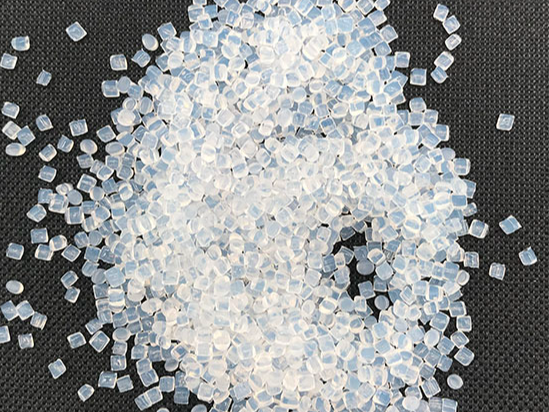
1. Choose fittings made from high-purity PFA resin.
Material purity is the foundation of semiconductor fluid systems.
High-purity PFA offers:
Low metal ion extractables
Low particle generation
Excellent chemical stability
Outstanding purity
These properties help minimize contamination in ultra-high-purity applications.
2. Chemical resistance is essential.
Semiconductor wet processes use highly aggressive chemicals,
including:
Hydrofluoric Acid (HF)
Sulfuric Acid (H₂SO₄)
Nitric Acid (HNO₃)
Hydrochloric Acid (HCl)
Potassium Hydroxide (KOH)
Ammonium Hydroxide (NH₄OH)
PFA fittings provide excellent resistance to these chemicals, ensuring long-term reliability.
3. High cleanliness helps reduce wafer contamination.
Particle contamination directly affects semiconductor yield.
Semiconductor-grade PFA fittings typically feature:
Smooth internal surfaces
Low particle generation
Low extractables
Easy cleaning
These characteristics make them ideal for high-purity chemical delivery systems.
4. Reliable sealing improves system safety.
Leak-free connections are essential when transporting ultra-pure chemicals.
High-quality PFA fittings offer:
Precision machining
Excellent dimensional consistency
Stable sealing performance
Reliable long-term operation
Proper sealing helps reduce chemical leakage and maintenance costs.
5. Temperature resistance supports demanding processes.
Many semiconductor applications involve elevated temperatures.
PFA fittings typically provide:
Continuous operating temperatures up to 260°C
Excellent thermal stability
Long-term durability
This makes them suitable for high-temperature chemical delivery systems.
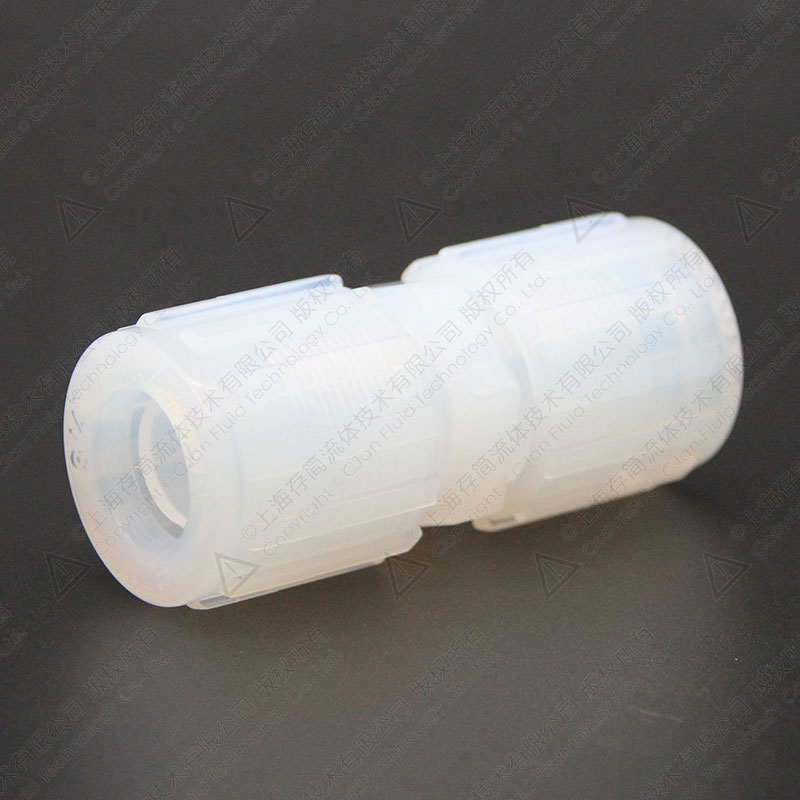
6. Select the correct fitting configuration.
Different fluid systems require different fitting types.
Common PFA fitting configurations include:
Straight unions
Elbows
Tees
Cross fittings
Reducers
Male threaded fittings
Female threaded fittings
Selecting the appropriate fitting design improves installation efficiency and system reliability.
7. Work with an experienced semiconductor fluid system supplier.
Product quality depends not only on raw materials but also on manufacturing expertise and quality control.
When evaluating suppliers, consider:
High-purity PFA processing capability
Quality management systems
Semiconductor industry experience
Inspection and testing reports
Custom engineering support
CJan Fluid Technology Co., Ltd. specializes in semiconductor PFA fittings, PFA tubing, and high-purity fluid transfer solutions for semiconductor, electronics, new energy, and chemical processing industries.
Typical Applications of Semiconductor PFA Fittings
| Industry | Typical Fluids |
| Semiconductor Manufacturing | Ultra-Pure Water (UPW) |
| Wet Process Equipment | HF, HCl, H₂SO₄ |
| Chemical Delivery Systems | Electronic Chemicals |
| Photovoltaic Manufacturing | Cleaning Chemicals |
| Lithium Battery Production | Electrolytes and Process Chemicals |
FAQ
Why are PFA fittings used in semiconductor manufacturing?
Because they offer high purity, low extractables, excellent chemical resistance, and outstanding temperature performance.
What chemicals are compatible with PFA fittings?
PFA fittings are compatible with most acids, alkalis, organic solvents, and high-purity process chemicals.
What is the difference between semiconductor-grade and standard PFA fittings?
Semiconductor-grade fittings are manufactured using higher-purity materials and stricter cleanliness standards to reduce contamination risks.
What temperature can PFA fittings withstand?
Most PFA fittings can operate continuously up to approximately 260°C under appropriate operating conditions.
How do I choose a reliable semiconductor PFA fittings manufacturer?
Look for high-purity materials, precision manufacturing, clean production processes, comprehensive quality testing, and proven semiconductor application experience.
CJan Fluid Technology Co., Ltd. provides high-purity PFA fittings and complete fluid transfer solutions for semiconductor manufacturing and other high-tech industries.

CJan Fluid Technology Co., Ltd. is a professional supplier of fluid technology solutions. Since establishment, we have been committed to solving fluid technology problems for global customers through our own research and development, import agency, and customized product services.



 Home
Home 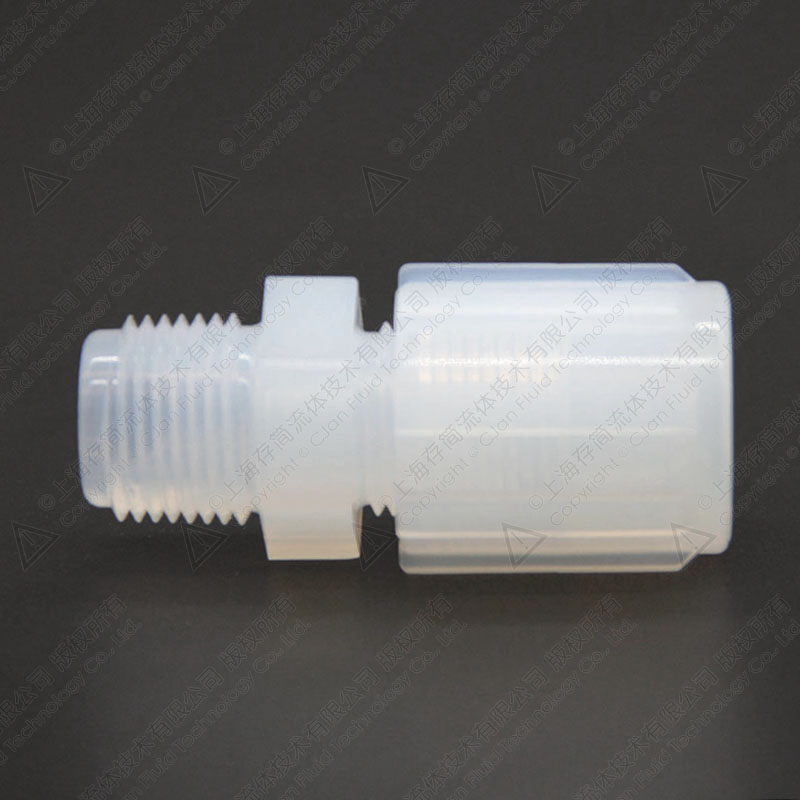

 TikTok
 H5 Webpage