
A high-purity fluid delivery system is an engineered piping and connection system designed to transport process chemicals, ultrapure water, and other critical fluids while minimizing contamination, leakage, and material-related risks.
In semiconductor manufacturing, fluid delivery systems are not simply used to move liquids from one point to another. The tubing, fittings, valves, seals, and other wetted components can directly affect the cleanliness, stability, and reliability of the process fluid.
A typical semiconductor high-purity fluid system may include:
PFA tubing
PFA flare fittings
PFA sleeve-insert fittings
PFA weld-type fittings
PFA valves
High-purity VCR fittings
High-purity stainless steel valves
High-purity stainless steel tubing and components
Filters and pressure-control components
Other fluid control and connection components
CJan's semiconductor product portfolio currently includes PFA tubing, PFA flare fittings, PFA sleeve-insert fittings, PFA valves, PFA weld-type fittings, high-purity VCR fittings, and ultra-high-purity stainless steel valves.
The appropriate combination depends on the process, fluid, pressure, temperature, cleanliness requirements, and connection method.
Semiconductor processes require highly controlled fluid systems because process chemicals and ultrapure fluids can be sensitive to contamination, chemical incompatibility, particles, and leakage.
Modern semiconductor manufacturing uses a wide range of process fluids, including:
Hydrofluoric acid (HF)
Hydrochloric acid (HCl)
Sulfuric acid (H₂SO₄)
Nitric acid (HNO₃)
Ammonium hydroxide (NH₄OH)
Hydrogen peroxide (H₂O₂)
Process solvents
Cleaning chemicals
Etching chemicals
Ultrapure water (UPW)
Other process-specific chemical mixtures
The exact fluid composition varies between semiconductor processes and equipment.
Because of this, fluid system design needs to consider several factors simultaneously.
The wetted materials must be compatible with the specific chemical, concentration, temperature, and pressure conditions.
A material that performs well with one chemical may not necessarily be appropriate for another chemical or concentration.
High-purity fluid systems must be designed to minimize particles, extractables, and other potential contamination sources.
This makes the selection of tubing, fittings, valves, seals, and manufacturing processes important.
Reliable connections are essential because leakage can affect equipment operation, process stability, personnel safety, and maintenance requirements.
The fluid components must withstand the mechanical and thermal conditions of the application without compromising the integrity of the system.
Semiconductor equipment often requires compact and carefully routed tubing systems, making flexibility, connection design, and serviceability important selection criteria.
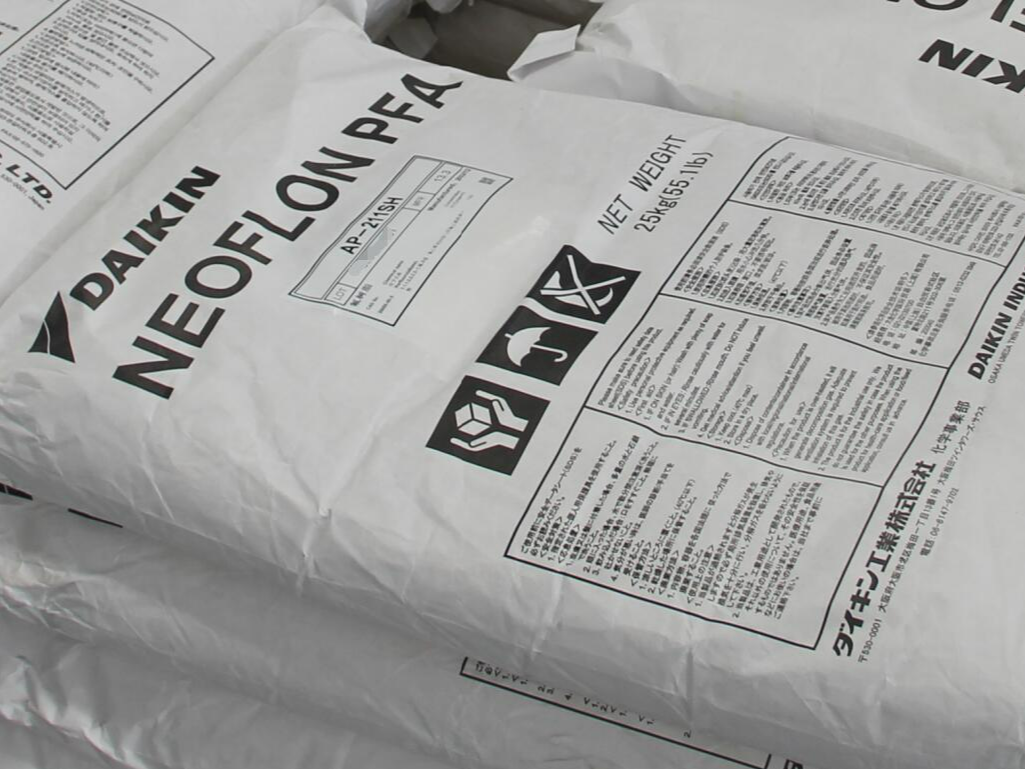
PFA tubing is widely used in semiconductor applications because PFA combines strong chemical resistance with high-purity characteristics and good thermal performance.
PFA, or perfluoroalkoxy polymer, is a fluoropolymer commonly selected for demanding chemical and high-purity fluid applications.
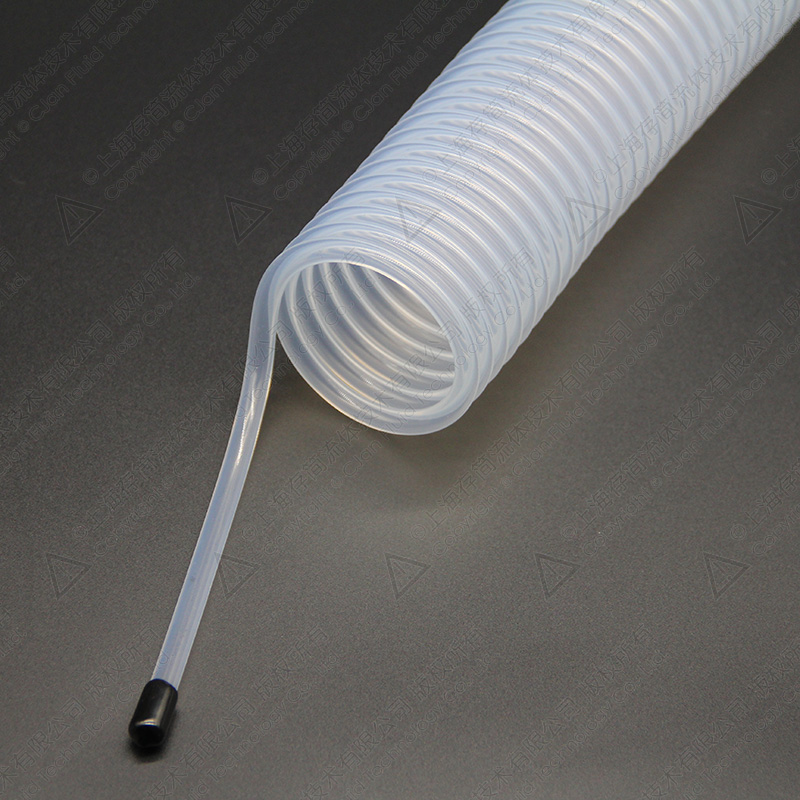
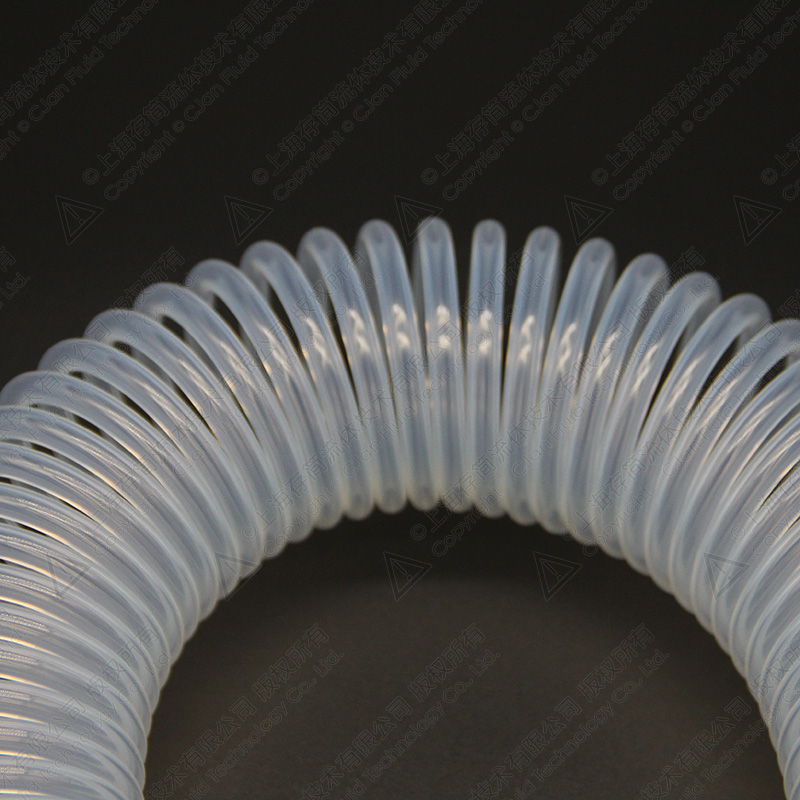
CJan offers several PFA tubing configurations, including high-purity PFA tubing, corrugated PFA tubing, flexible PFA tubing, and other application-specific tubing designs.
PFA provides strong resistance to many aggressive chemicals, making it suitable for a wide range of semiconductor chemical handling applications.
This is particularly important in wet processing, chemical distribution, cleaning, and etching-related systems.
However, PFA should not be considered universally compatible with every chemical under every condition.
Engineering selection should consider:
Chemical + Concentration + Temperature + Pressure + Exposure Time
rather than relying only on the name of the material.
PFA is commonly selected for high-purity fluid handling because fluoropolymer materials can provide suitable purity and low-extractable characteristics for demanding process environments.
For semiconductor applications, material selection is not only about corrosion resistance. The potential contribution of the wetted material to the fluid system must also be considered.
CJan's semiconductor materials and product information specifically positions PFA components for high-purity fluid connection applications.
PFA offers a broad temperature capability, but the allowable operating temperature of a specific PFA tubing product depends on its construction and operating conditions.
Factors such as:
Tubing size
Wall thickness
Working pressure
Chemical medium
Continuous operating time
Temperature cycling
Connection design
can affect actual application performance.
For this reason, engineers should use the manufacturer's product-specific specifications rather than relying only on general material properties.
Flexible PFA tubing can simplify routing in semiconductor equipment where space is limited or where equipment connections require controlled bending.
This can be particularly useful around:
Chemical delivery modules
Wet benches
Cleaning equipment
Chemical distribution systems
Process tools
Secondary distribution systems
CJan's current PFA tubing range includes flexible and corrugated configurations designed for different installation requirements.
PFA tubing is commonly used in selected high-purity and chemically demanding fluid transfer applications throughout semiconductor equipment and chemical distribution systems.
Typical applications include:
Wafer cleaning processes use a variety of chemicals and ultrapure water.
PFA tubing can be used for selected chemical and high-purity fluid transfer applications where chemical compatibility and cleanliness are important.
Wet processing equipment often handles corrosive chemical solutions.
PFA tubing can provide a flexible connection solution for selected chemical delivery and equipment piping applications.
Semiconductor facilities use centralized and point-of-use chemical delivery systems to supply process tools.
PFA tubing can be used in selected distribution branches and equipment connections.
UPW is widely used throughout semiconductor manufacturing.
Depending on the system design, PFA components can be used in selected high-purity water applications.
Some semiconductor gas monitoring and sampling applications require tubing with controlled adsorption and contamination characteristics.
CJan currently publishes PFA tubing solutions for semiconductor gas detection applications involving gases such as HF, HCl, and NH₃.
A high-purity PFA tubing system can only perform as intended when the fittings, valves, seals, and other connected components are appropriately matched to the tubing and process conditions.
The tubing is only one part of the fluid path.
For example, a system may use high-purity PFA tubing but still require careful consideration of:
Fitting material
Fitting geometry
Sealing method
Wetted surface
Connection strength
Chemical compatibility
Installation procedure
Cleanliness
Pressure rating
This is why semiconductor fluid systems are typically designed as complete fluid paths rather than as individual components.
A typical fluoropolymer fluid path may be configured as:
PFA Tubing → PFA Fitting → PFA Valve → PFA Tubing
For other applications, the system may use:
PFA Tubing → High-Purity Stainless Steel Fitting → High-Purity Valve
The appropriate configuration depends on the process and the required fluid connection technology.
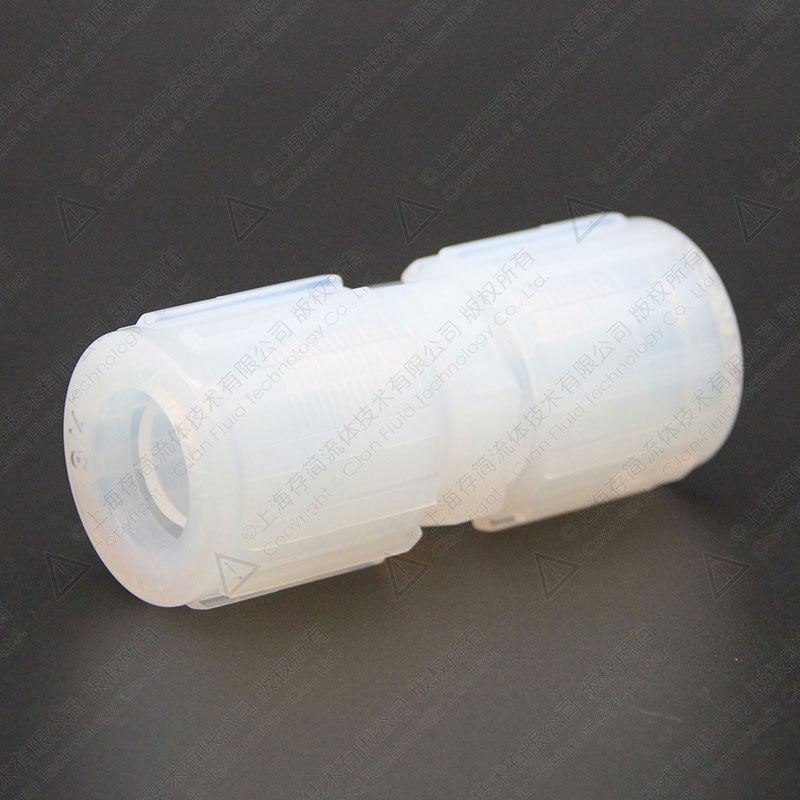
PFA fittings are available in different connection designs, including flare, sleeve-insert, bead-type, and weld-type configurations, allowing engineers to select a connection method according to the tubing and system requirements.
CJan's product portfolio includes PFA flare fittings, sleeve-insert fittings, and weld-type fittings.
PFA flare fittings use a flared tubing connection to create a reliable connection between compatible fluoropolymer tubing and the fitting.
They can be used in selected semiconductor applications involving:
Chemical delivery
Wet processing
Etching systems
Ultrapure water
High-purity fluid transfer
CJan's published PFA flare fitting information identifies semiconductor, ultrapure water, and corrosive chemical applications as key use areas.
When selecting a flare fitting, engineers should verify:
Tubing OD
Tubing wall thickness
Fitting size
Connection standard
Working pressure
Operating temperature
Chemical compatibility
PFA sleeve-insert fittings use an insertion-type connection structure and are available in various configurations for space-efficient semiconductor fluid routing.
CJan currently lists straight unions, elbows, tees, reducers, male unions, panel-mount fittings, and other sleeve-insert configurations.
The appropriate fitting should be selected according to the tubing dimensions and required connection geometry.
PFA weld-type fittings create a permanent fluoropolymer connection by joining compatible PFA components through a controlled welding process.
This type of connection can be useful when the system design prioritizes a permanent, integrated fluid path.
The welding process itself is important. Correct equipment, temperature control, alignment, and operator technique can all influence connection quality.
PFA valves are used to control the flow of high-purity or chemically aggressive fluids in selected semiconductor processing and chemical distribution applications.
While tubing transports the fluid and fittings connect the tubing, valves provide flow control.
Depending on the design, a PFA valve may be used for:
Flow isolation
Flow control
Chemical distribution
Equipment maintenance
Process switching
Fluid routing
CJan's product range includes PFA valves for high-purity semiconductor, ultrapure water, and corrosive chemical applications.
PFA diaphragm valves can be suitable for selected semiconductor fluid applications because their design allows controlled fluid isolation while using fluoropolymer wetted components.
When selecting a PFA valve, engineers should evaluate more than the valve body material.
Important factors include:
The materials directly exposed to the process fluid must be compatible with the chemical and operating conditions.
The internal flow path should be evaluated according to the process requirements, including cleaning, drainage, and fluid retention considerations.
The diaphragm and other sealing components must be compatible with the process medium.
The valve's pressure rating must match the actual system pressure and operating conditions.
The complete valve assembly must be evaluated at the intended operating temperature.
The valve should match the tubing and fitting system used in the equipment.
CJan also offers PFA needle valves and other fluoropolymer valve solutions for high-cleanliness and corrosion-resistant applications.
The most reliable approach is to select PFA tubing, fittings, and valves as a complete fluid path rather than choosing each component independently.
| Component | Primary Function | Key Selection Factors |
|---|---|---|
| PFA Tubing | Fluid transfer | Chemical, temperature, pressure, size, flexibility |
| PFA Fittings | Tubing connection | OD, connection type, sealing, material compatibility |
| PFA Valves | Flow control | Valve type, pressure, temperature, wetted materials |
| VCR Fittings | High-purity gas connection | Material, surface finish, sealing method, pressure |
| High-Purity Stainless Steel Valves | Gas/fluid control | Purity, pressure, valve configuration, sealing |
| Filters | Fluid purification | Filtration rating, material compatibility, flow rate |
CJan's current product portfolio combines fluoropolymer components with high-purity stainless steel products, allowing different fluid systems to be configured according to their application requirements.
Selecting PFA tubing for semiconductor applications requires evaluating the fluid, concentration, temperature, pressure, tubing dimensions, flexibility, connection method, and cleanliness requirements together.
First determine whether the tubing will carry:
Acid
Alkali
Oxidizing chemicals
Solvents
Ultrapure water
Gas sampling media
Other process chemicals
The same chemical can have different material compatibility characteristics at different concentrations.
Therefore, the chemical name alone is not sufficient for engineering selection.
Consider:
Normal operating temperature
Maximum temperature
Temperature cycling
Cleaning temperature
Emergency temperature conditions
The tubing must be selected according to the actual working pressure and the product's specified pressure rating.
Pressure and temperature should be evaluated together.
Tubing ID affects flow rate and pressure drop, while OD and wall thickness affect connection compatibility and mechanical performance.
Depending on the system, options may include:
Flare connections
Sleeve-insert connections
Welded connections
Other compatible connection methods
For high-purity applications, consider:
Material purity
Internal surface cleanliness
Particle control
Packaging
Handling
Installation environment
PFA, PTFE, and PVDF can all be used in certain chemical fluid systems, but their properties and suitable applications are different.
| Material | General Characteristics | Typical Application Direction |
|---|---|---|
| PFA | High chemical resistance, high-purity characteristics, good thermal performance | High-purity chemical transfer and demanding fluid systems |
| PTFE | Excellent chemical resistance and broad chemical compatibility | Aggressive chemical and specialized fluid applications |
| PVDF | Balanced chemical resistance and mechanical properties | Industrial chemical fluid systems and selected high-purity applications |
There is no universal material that is automatically the best choice for every semiconductor application.
The correct selection depends on the actual chemical, concentration, temperature, pressure, cleanliness requirements, tubing structure, and connection method.
Leak prevention depends on the complete system design, including tubing selection, fitting design, valve selection, installation quality, and appropriate testing.
Key practices include:
The tubing, fittings, valve components, and seals should be compatible with the process medium.
Tubing dimensions must match the selected fitting design.
Improper flaring, insertion, welding, or tightening can compromise connection reliability.
Tubing should not place excessive pulling, twisting, or bending forces on fittings and valves.
Flexible tubing should be routed within the manufacturer's recommended bending limits.
Depending on the system, pressure testing, leak testing, or other inspection methods may be required before commissioning.
Contamination control is critical because particles, metal ions, extractables, and other unwanted substances can potentially affect sensitive semiconductor processes.
Contamination can originate from multiple sources, including:
Tubing
Fittings
Valves
Sealing materials
Manufacturing processes
Installation tools
Packaging
Improper handling
Therefore, high-purity fluid engineering should consider the complete fluid path.
This is also why semiconductor-grade PFA fittings are evaluated based on more than chemical resistance. Material purity, cleanliness, dimensional accuracy, and manufacturing quality can all affect the final application. CJan's technical guidance specifically identifies high-purity PFA resin, low extractables, particle control, and dimensional accuracy as important factors in PFA fitting selection.
PFA fluid components can be applied to a range of semiconductor processes where chemical resistance and high-purity fluid handling are required.
Typical application areas include:
Wafer cleaning
Wet etching
Chemical delivery
Chemical distribution
Ultrapure water handling
Semiconductor equipment piping
Secondary chemical distribution
Chemical supply modules
Selected gas sampling systems
High-purity fluid modules
The specific product and material should always be verified against the actual process conditions.
A semiconductor fluid component supplier should be evaluated based on product capability, material quality, manufacturing expertise, cleanliness control, customization capability, and application support rather than product price alone.
A supplier may be able to provide:
PFA Tubing
PFA Flare Fittings
PFA Sleeve-Insert Fittings
PFA Weld-Type Fittings
PFA Valves
High-Purity VCR Fittings
High-Purity Stainless Steel Valves
PVDF Weld-Type Fittings
Customized Fluoropolymer Components
CJan's current product portfolio includes these categories for high-purity fluid connection applications.
A qualified supplier should be able to evaluate:
Fluid + Concentration + Temperature + Pressure + Tubing Size + Connection Method + Cleanliness Requirements
rather than simply recommending a product based on the fluid name.
Semiconductor equipment frequently requires customized dimensions, connection configurations, or special routing solutions.
CJan states that it provides standard and customized fluoropolymer products, including PFA, FEP, and PTFE tubing and PFA/PTFE/PVDF fittings and valves.
A supplier with experience in high-purity fluid systems can better understand the practical requirements associated with chemical delivery, wet processing, high-purity connections, and equipment integration.
A semiconductor high-purity fluid delivery system is a controlled piping and component system used to transport process chemicals, ultrapure water, gases, or other critical fluids while minimizing contamination and leakage risks.
PFA tubing is used because it offers strong chemical resistance and high-purity characteristics suitable for many demanding semiconductor fluid handling applications.
No. PFA compatibility must be verified for the specific chemical, concentration, temperature, pressure, and exposure conditions.
Common PFA fitting configurations include flare fittings, sleeve-insert fittings, bead-type fittings, and weld-type fittings.
PFA valves are used for flow isolation and control in selected high-purity and chemically aggressive fluid systems.
Both are fluoropolymers with excellent chemical resistance, but their processing characteristics, flexibility, purity characteristics, and application suitability can differ.
PFA generally offers stronger fluoropolymer chemical resistance and high-purity characteristics, while PVDF provides a different balance of chemical resistance and mechanical properties. The correct choice depends on the actual process conditions.
Not necessarily. The fitting material and connection design should be selected according to the tubing, process fluid, pressure, temperature, and cleanliness requirements.
Start with the process fluid and concentration, then evaluate temperature, pressure, tubing dimensions, flexibility, connection method, and cleanliness requirements.
Key factors include material quality, product range, cleanliness control, manufacturing capability, dimensional consistency, customization, application experience, and technical support.
High-purity fluid delivery systems are an essential part of semiconductor manufacturing because process fluids must be transported with controlled contamination, reliable connections, and appropriate material compatibility.
PFA tubing provides the primary fluid transfer path in many chemically demanding applications. PFA fittings connect tubing sections and equipment interfaces, while PFA valves provide flow isolation and control. High-purity VCR fittings and stainless steel valves can also be used where the application requires metal high-purity gas or fluid connection technology.
The correct engineering approach is therefore not simply to select a “PFA tube.” Instead, the entire fluid path should be evaluated:
Process Fluid → Chemical Concentration → Temperature → Pressure → Tubing → Fittings → Valves → Sealing → Installation → Testing
For semiconductor applications, CJan provides high-purity fluid connection products including PFA Tubing, PFA Fittings, PFA Valves, PFA Weld-Type Fittings, High-Purity VCR Fittings, and Ultra-High-Purity Stainless Steel Valves. The company also provides customized fluoropolymer products for demanding fluid handling applications.
CJan Fluid Technology Co., Ltd. focuses on high-purity fluid connection solutions and provides products for semiconductor, photovoltaic, chemical, and other demanding industrial applications. Established in 2013, CJan combines product development, manufacturing, import and export, and customized services to support high-purity fluid handling requirements for global customers.

CJan Fluid Technology Co., Ltd. is a professional supplier of fluid technology solutions. Since establishment, we have been committed to solving fluid technology problems for global customers through our own research and development, import agency, and customized product services.



 Home

 TikTok
 H5 Webpage